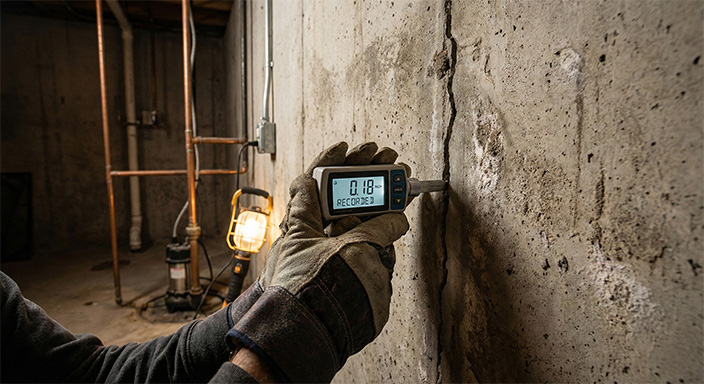
Buildings of any age are subject over time to weather conditions, ground shifting, warping, and more. For this reason, Criterium-Hardy offers structural engineering evaluations.
Concerned with the structural integrity of your house? Or a house that you are purchasing? Typical concerns include: Cracks in foundation walls, cracks in drywall, cracks in concrete slabs, sagging or uneven floors, chimneys or porches separating from main structures, temporary support structures, leaning retaining walls, cut or removed framing members, etc. We will provide an evaluation of the house and a report detailing our findings and specific repair recommendations.
When do you need a structural engineering evaluation?
When there are cracks in the foundation or walls.
When there is bowing or sagging in the walls and roof.
Where there is carpenter ant, termite, or rot damage.
When an appraiser perceives a structural defect.
When a new home is under construction.
When a mortgage company/bank needs an engineer’s opinion before writing a loan.
When there is a concern about the structural integrity of the building or home.
When there is fire, flood, water or high wind damage.
If you suspect your home has any structural deficiency, contact Criterium Engineers to perform a structural engineering evaluation before a small problem becomes more serious.
No questions have been provided for evaluation, which means we currently do not have specific inquiries to address. Please feel free to submit any questions you may have regarding our structural engineering evaluation services.
What services does residential engineering consulting offer?
Residential engineering consulting offers a range of services, including structural assessments, design evaluations, code compliance reviews, and recommendations for repairs or modifications to ensure the safety and integrity of residential structures.
How can I find a reliable engineering consultant?
Finding a reliable engineering consultant involves researching credentials, reading client reviews, and checking for relevant experience in structural evaluations. Additionally, seeking recommendations from industry professionals can help ensure you choose a trustworthy expert.
What qualifications should an engineering consultant have?
The qualifications an engineering consultant should have include a relevant degree in engineering, professional licensure, and experience in structural evaluations. Additionally, strong analytical skills and knowledge of safety standards are essential for effective consulting.
Why is structural evaluation important for safety?
Structural evaluation is crucial for safety because it assesses the integrity of structures, identifying potential hazards and ensuring compliance with safety standards. This proactive approach helps prevent failures, protects lives, and maintains the longevity of buildings and infrastructure.
How often should structures be evaluated?
Structures should be evaluated regularly to ensure safety and integrity. Generally, evaluations are recommended every 5 to 10 years, or more frequently if the structure experiences significant changes or events.
What are common issues found in evaluations?
Common issues found in evaluations include structural deficiencies such as cracks, corrosion, improper drainage, and inadequate load-bearing capacity, which can compromise the safety and integrity of a building or structure.
How does engineering consulting improve project outcomes?
Engineering consulting improves project outcomes by providing expert assessments and tailored solutions that enhance design efficiency, ensure compliance with safety standards, and mitigate risks, ultimately leading to successful project completion and increased structural integrity.
What factors influence the cost of consulting services?
The factors that influence the cost of consulting services include the complexity of the project, the expertise required, the duration of the engagement, and the specific needs of the client.
What technologies are used in structural evaluations?
The technologies used in structural evaluations include advanced software for modeling and simulation, non-destructive testing methods, and data collection tools such as drones and sensors to assess structural integrity and safety effectively.